IMMERSIVE TOURISM EXPERIENCE IN UTTRAKHAND
Client
Master's Graduation Project
Industry
Tourism
Role
UX Researcher, Service Designer
Deliverables
Year
2023
TL;DR
Problem
Uttarakhand’s tourism economy is constrained by infrastructure gaps, rural out-migration and risks to cultural heritage.
My work
Led contextual field research across pilgrimage circuits, ran provotype interviews, synthesized personas and journey maps, and produced a full service blueprint and ecosystem map.
Outcome
A research-validated service model — immersive retreats and curated journeys — designed to empower local communities, improve safety, and preserve culture; aligns with Uttarakhand Tourism Policy 2030 and the UN SDGs.
Problem & Context
Uttarakhand is a high-value cultural and natural region, but its tourism benefits are uneven. Pilgrims and tourists regularly face poor wayfinding, limited medical support, inconsistent accommodations and few meaningful ways to engage with local culture. At the same time, rural communities see out-migration because local economic opportunities are scarce.
This project uses service design to answer: How might we design immersive tourism that preserves culture, creates local livelihoods, and ensures safe, meaningful experiences?
“Tourists come and go but rarely talk to us; they miss what the place truly means.” — shopkeeper, Gangotri
Role & Responsibilities
Lead UX Researcher (Thesis / Service-Design Research Lead)
Research design, recruitment and field logistics
Contextual inquiry & provotype interviews
Thematic synthesis and affinity mapping
Persona creation, journey maps & storyboards
Service blueprinting, ecosystem & value-web mapping
Stakeholder alignment and business model framing
Methods — How I did the research
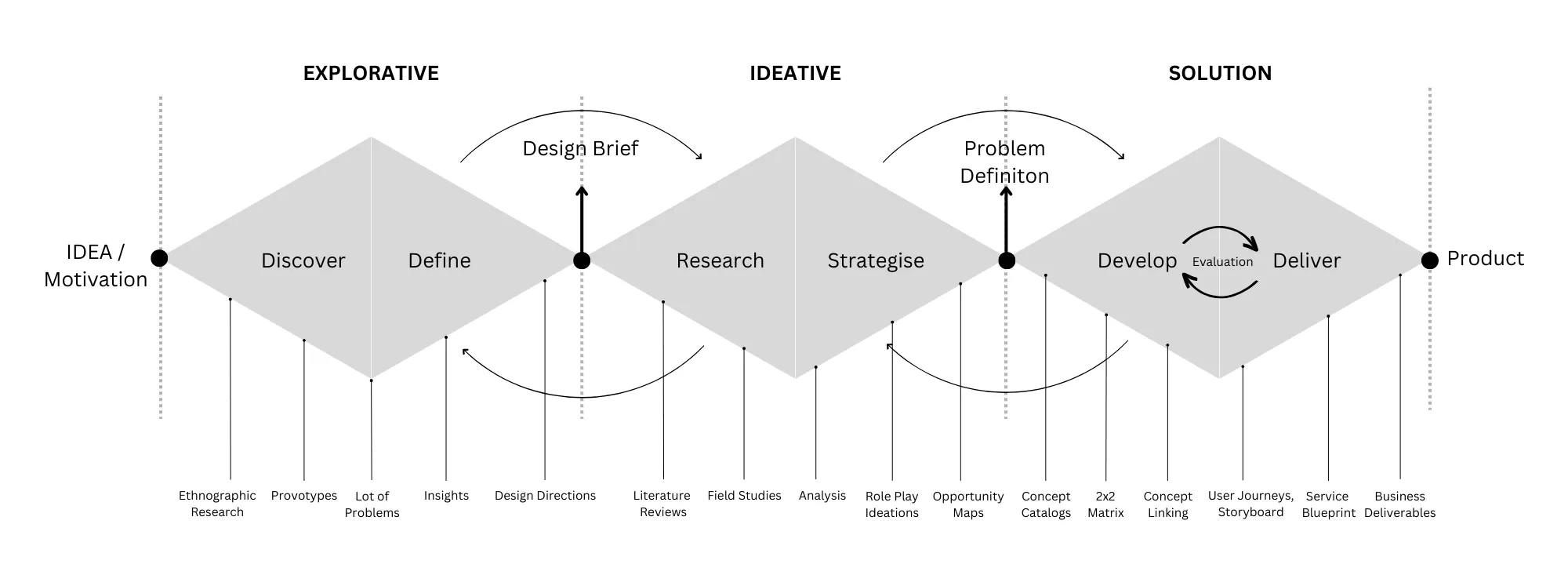
Process (Key Stages): Contextual Inquiry → Provotype Interviews → Affinity Clustering → HMW Framing → Personas & Journey Maps → Storyboards & Prototypes → Service Blueprint & Ecosystem Map
Contextual inquiry / Field observation: Multiple site visits along the Char Dham circuit and rural villages to observe pilgrim flows, rituals, infrastructure and local livelihoods. (Artifacts: field photos, observation notes.)
Provotype interviews: Used low-fidelity provotypes (story frames, maps) to help participants recall travel episodes and elicit rich narratives and emotions. (Artifacts: interview transcripts, quotes.)
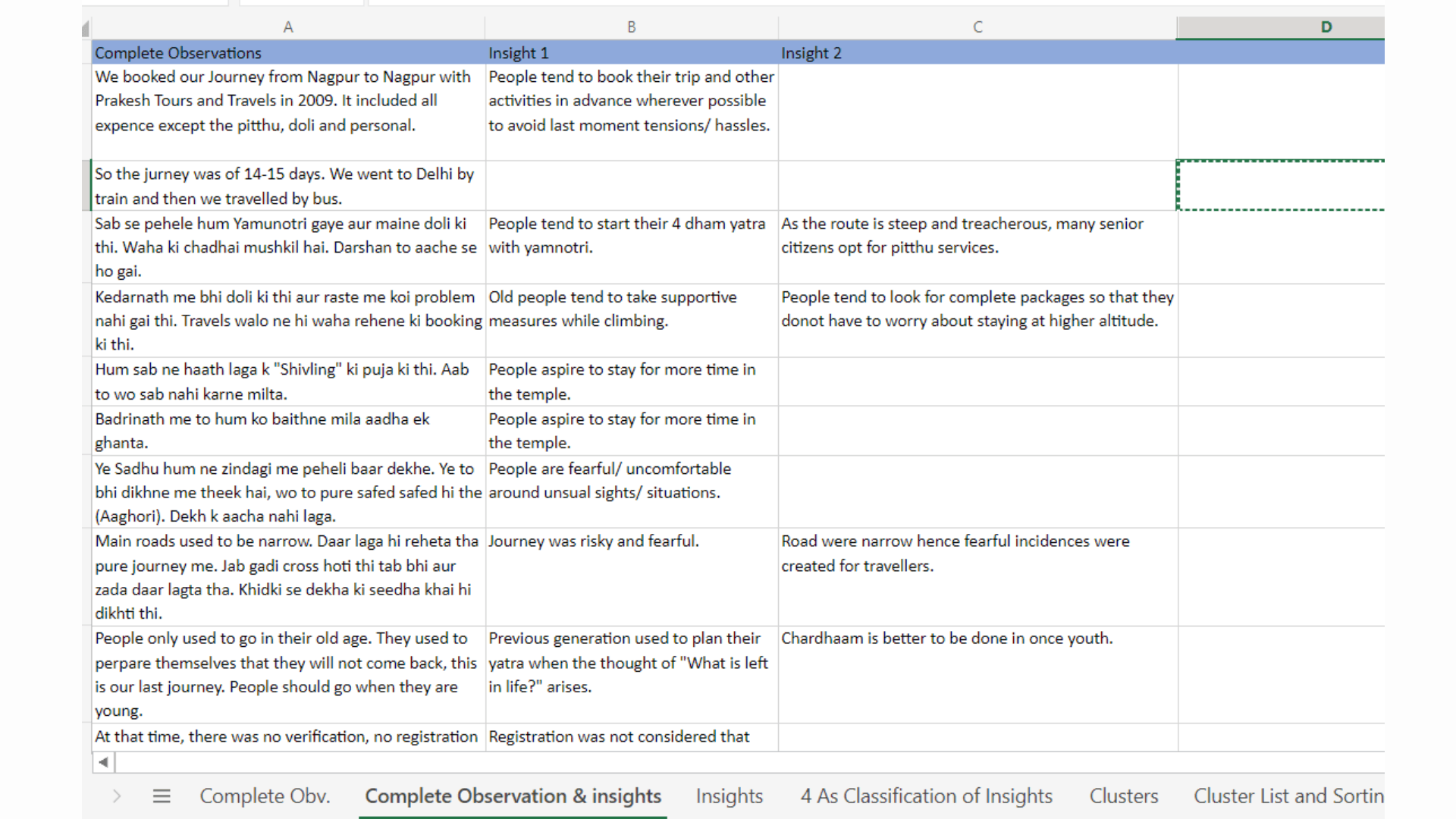
Affinity mapping & thematic analysis: Translated 60+ observations and verbatim quotes into clustered insights and prioritized problem areas. (Artifact: insight clusters.)
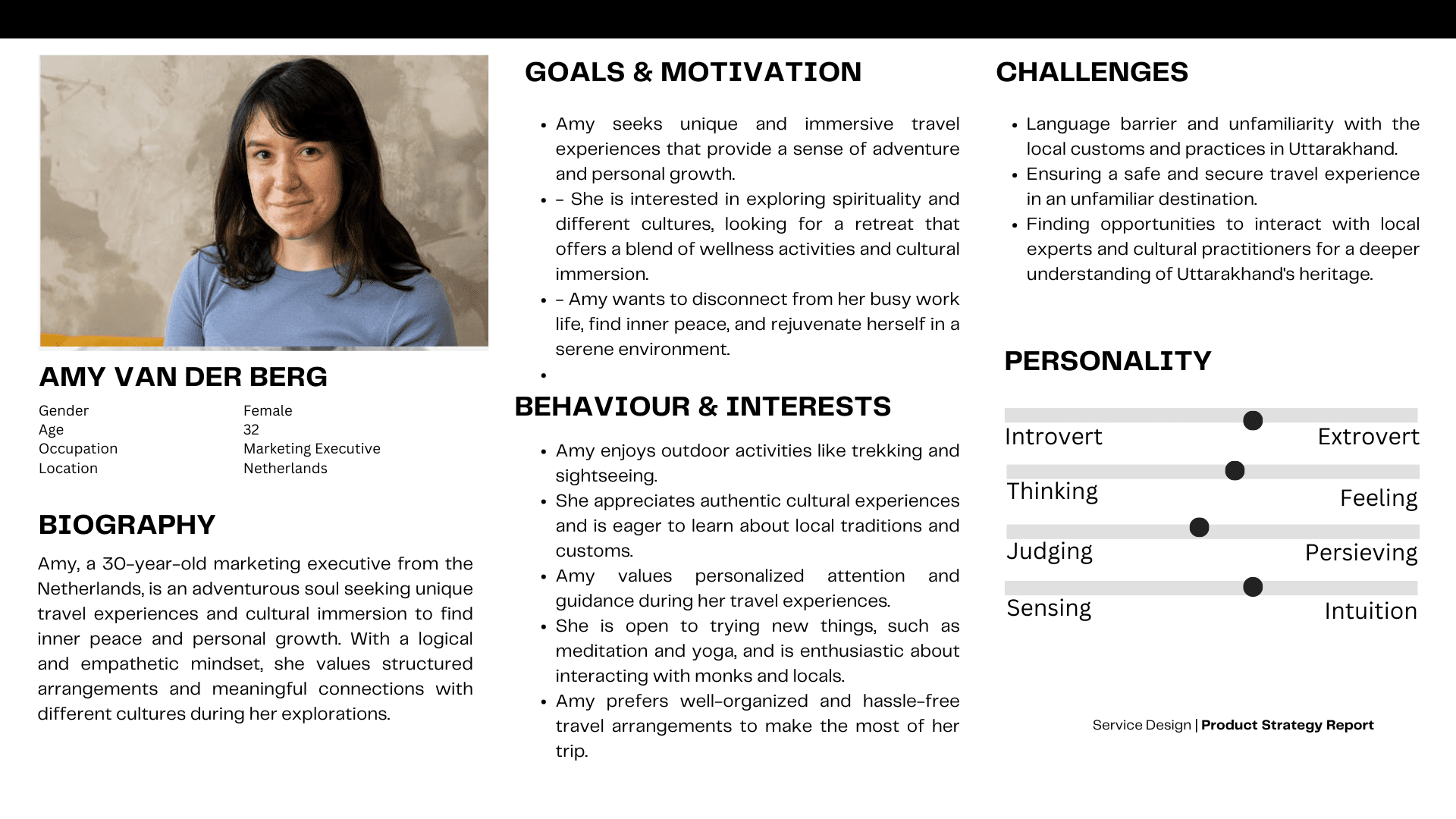
Persona development: Built 3 target personas to represent priorities, constraints and motivations. (Artifact: persona cards.)
Journey maps & storyboards: Visualized the end-to-end pilgrim journey, mapped emotional highs/lows and identified friction points. (Artifact: journey map + storyboard frames.)
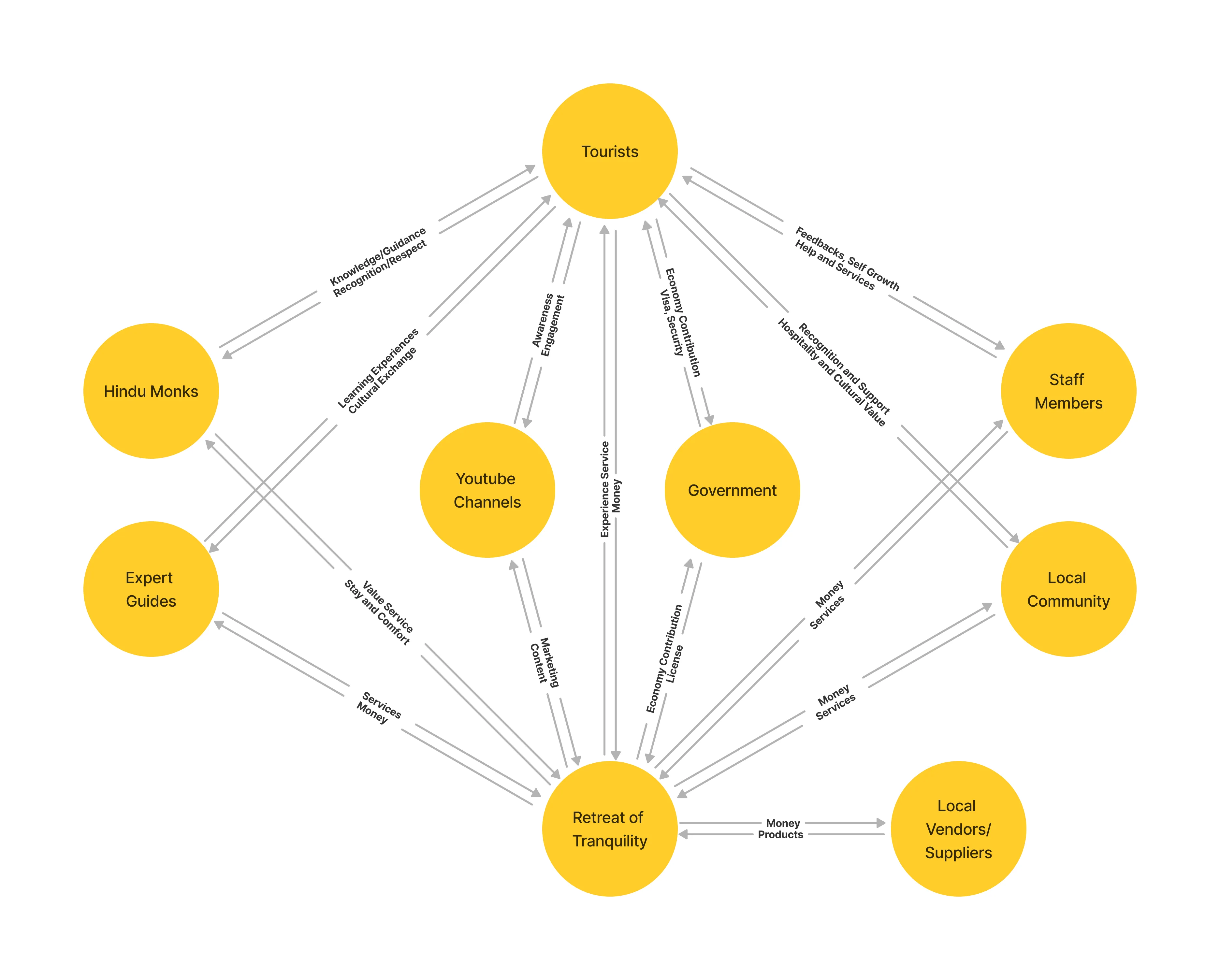
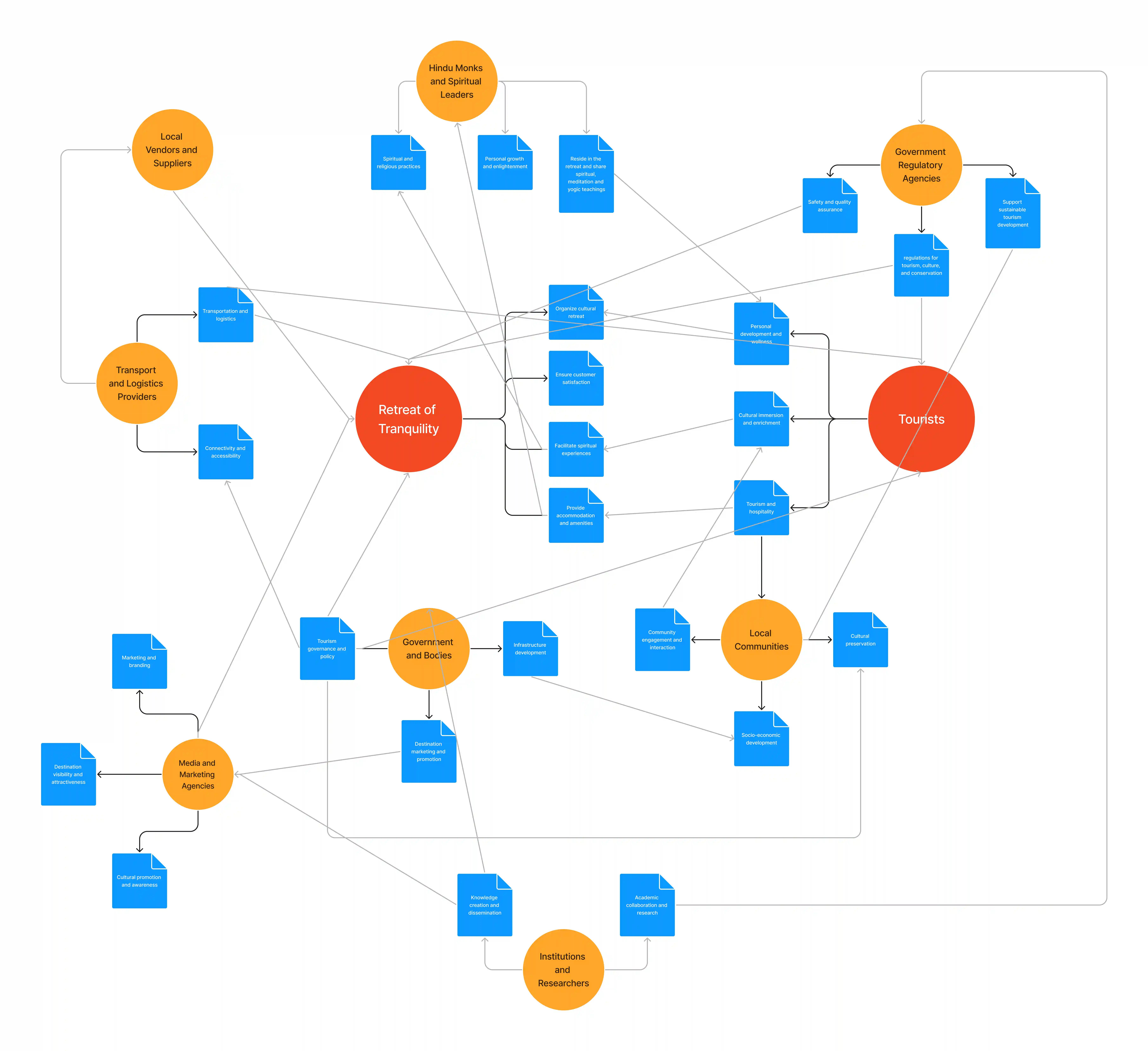
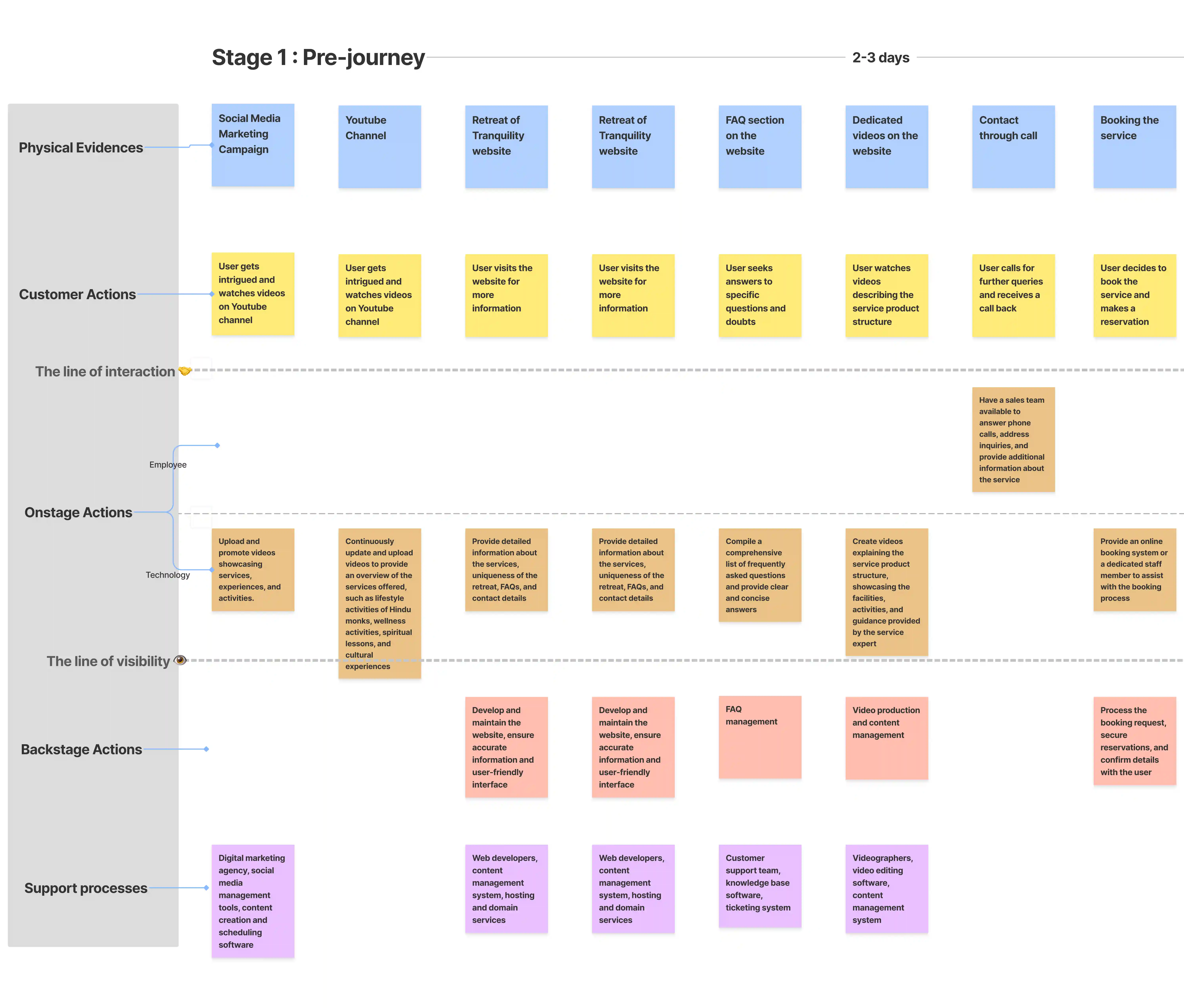
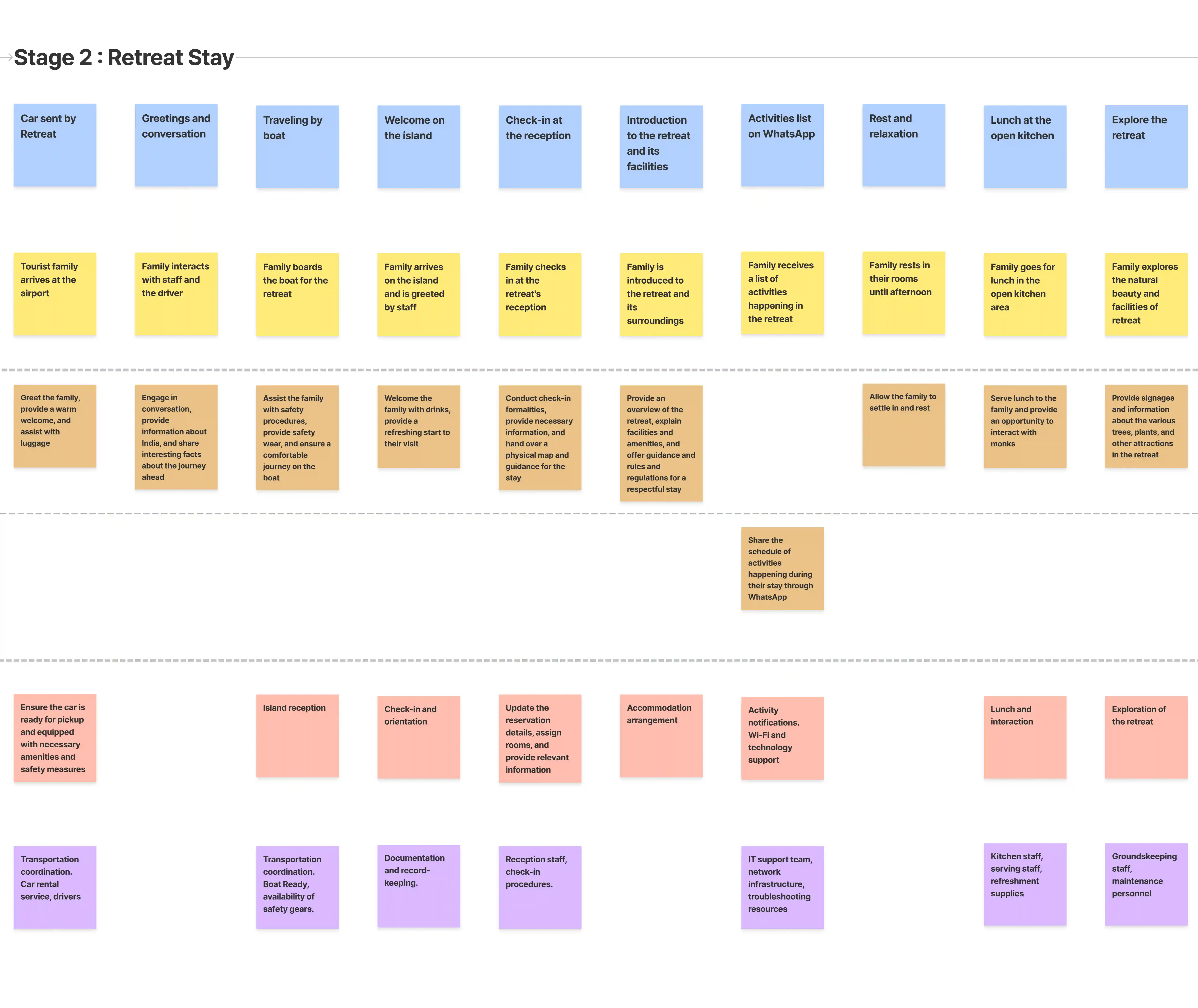
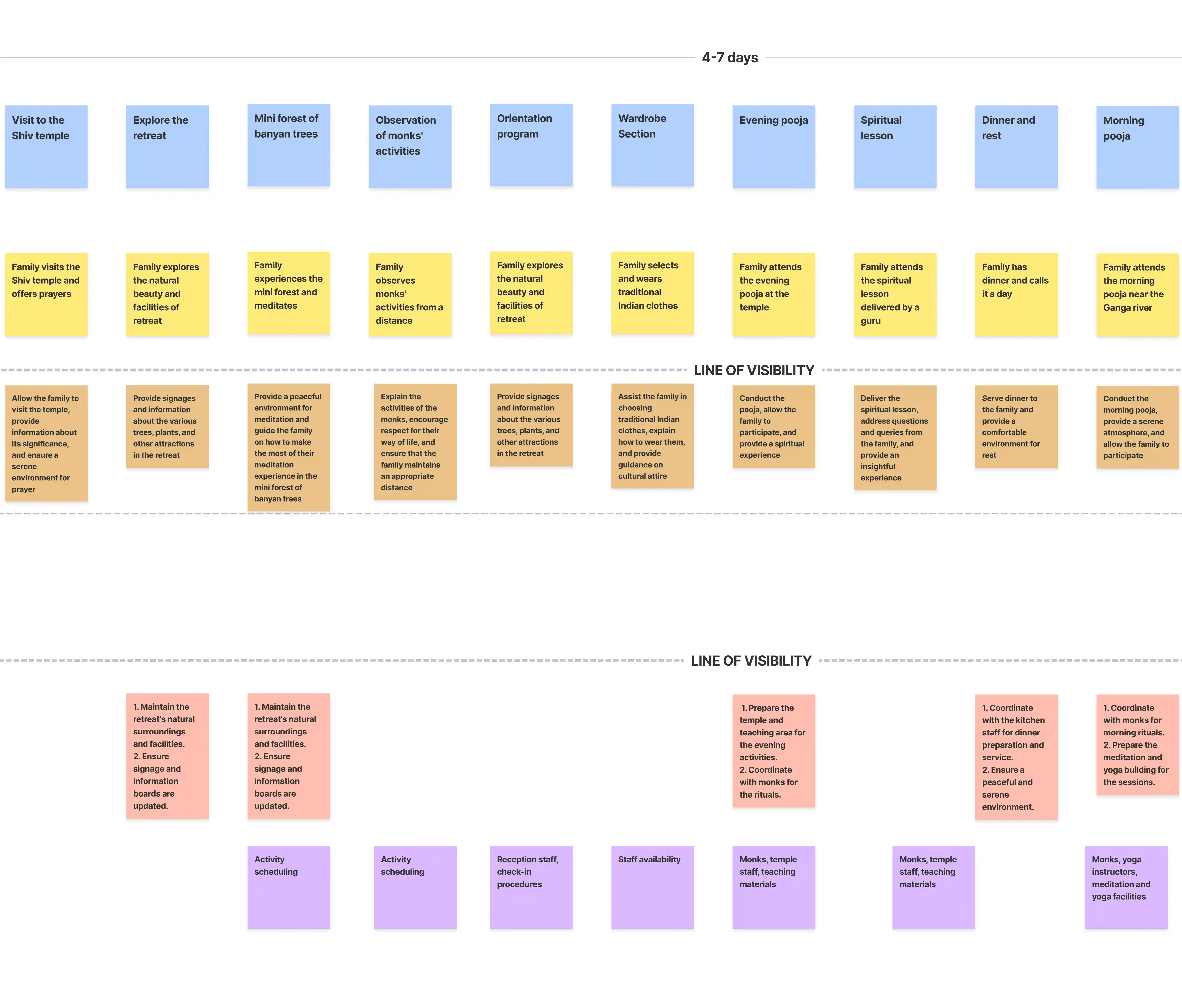
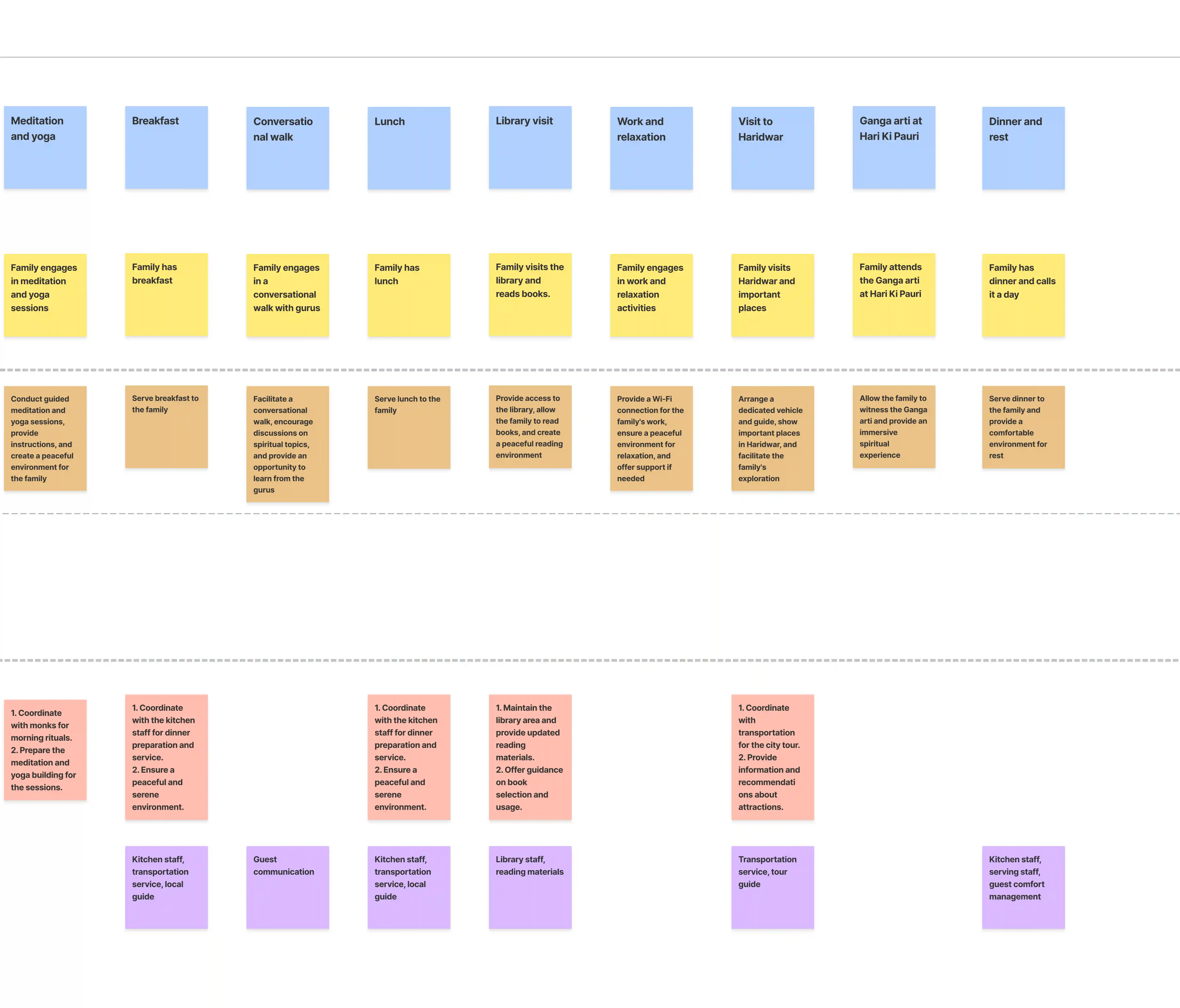
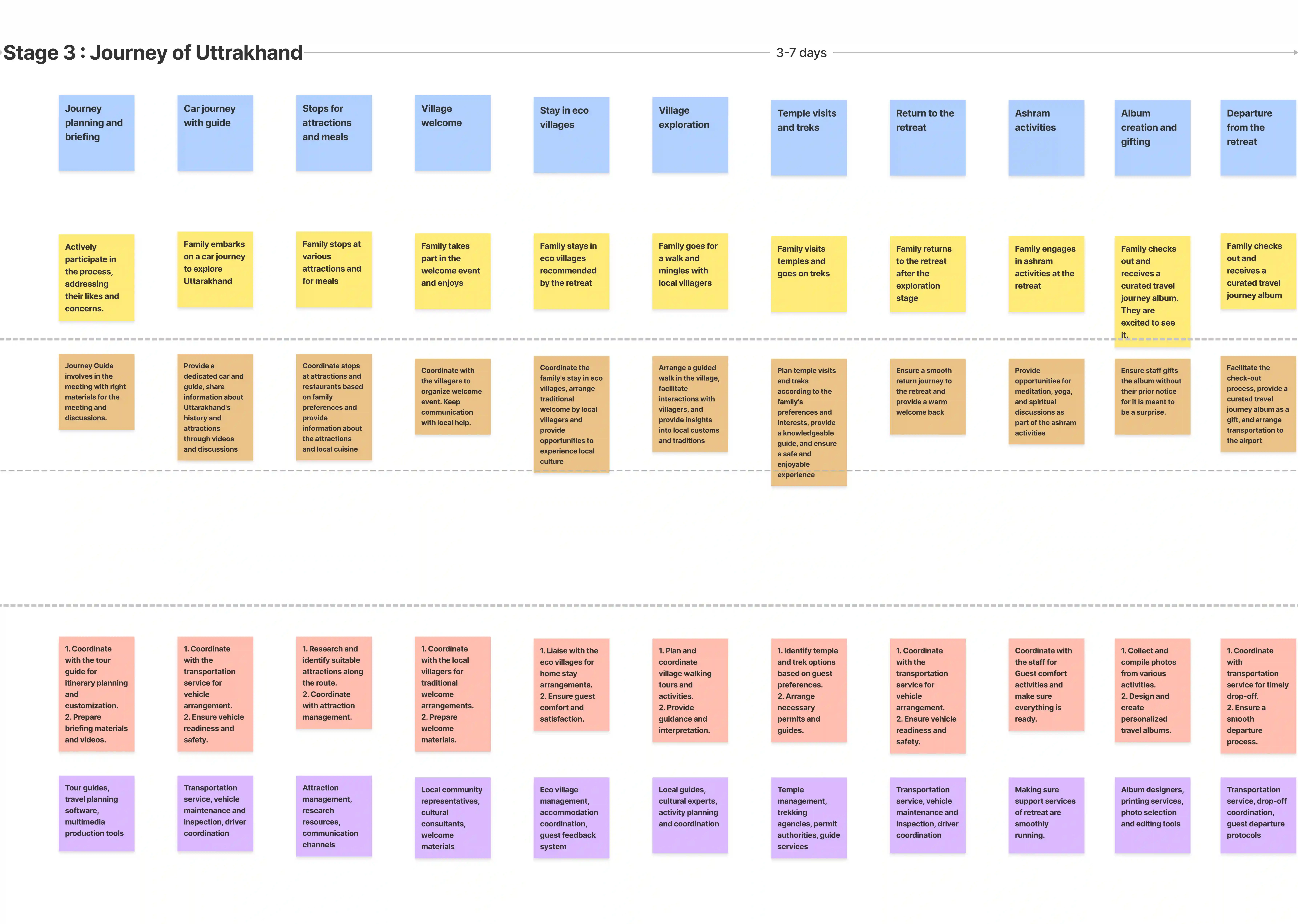
Service blueprinting & ecosystem mapping: Mapped touchpoints to frontstage/backstage processes and stakeholder value exchanges — created a deployable blueprint for pilots. (Artifacts: service blueprint PDF, ecosystem & value web.)
Key Insights
Insight 1 — Information gaps create anxiety
Evidence: Pilgrims consistently reported lack of accurate maps, signage and reliable guidance.
Implication: Build pre-trip planning tools and in-route wayfinding (maps + real-time updates) to reduce uncertainty.
Insight 2 — Pilgrims seek authentic, spiritual transformation
Evidence: Emotional interview data emphasized rituals, temple ceremonies and slow, reflective experiences.
Implication: Design experiences that preserve ritual authenticity and provide structured reflection time (guided rituals, debrief sessions).
Insight 3 — Infrastructure limitations create safety and accessibility risks
Evidence: Reports of insufficient medical support, poor road conditions and limited options for elderly/differently-abled visitors.
Implication: Add fail-safe operational elements (medical nodes, vetted transport partners, accessibility routes) in the blueprint.
Insight 4 — Local communities want meaningful economic participation
Evidence: Villagers desire income-generating roles but lack structured channels for tourist engagement.
Implication: Co-create host roles (homestays, craft workshops, guided micro-experiences) and define revenue shares.
Insight 5 — High-value low-volume (HVLV) positioning reduces pressure and increases quality
Evidence: Comparative case studies (Bhutan) show HVLV can preserve culture and environment.
Implication: Target premium visitors with curated itineraries; invest revenue into local development and conservation.
Key Deliverables
Personas — “Three research-synthesized user archetypes used to validate program flows.”
Journey Map — “End-to-end pilgrim journey highlighting emotion, friction, and opportunity.”
Blueprint — “Stage-wise service blueprint linking guest touchpoints to operations and risk controls.”
Ecosystem Map — “Stakeholder map and value exchanges used to align partnership strategy.”
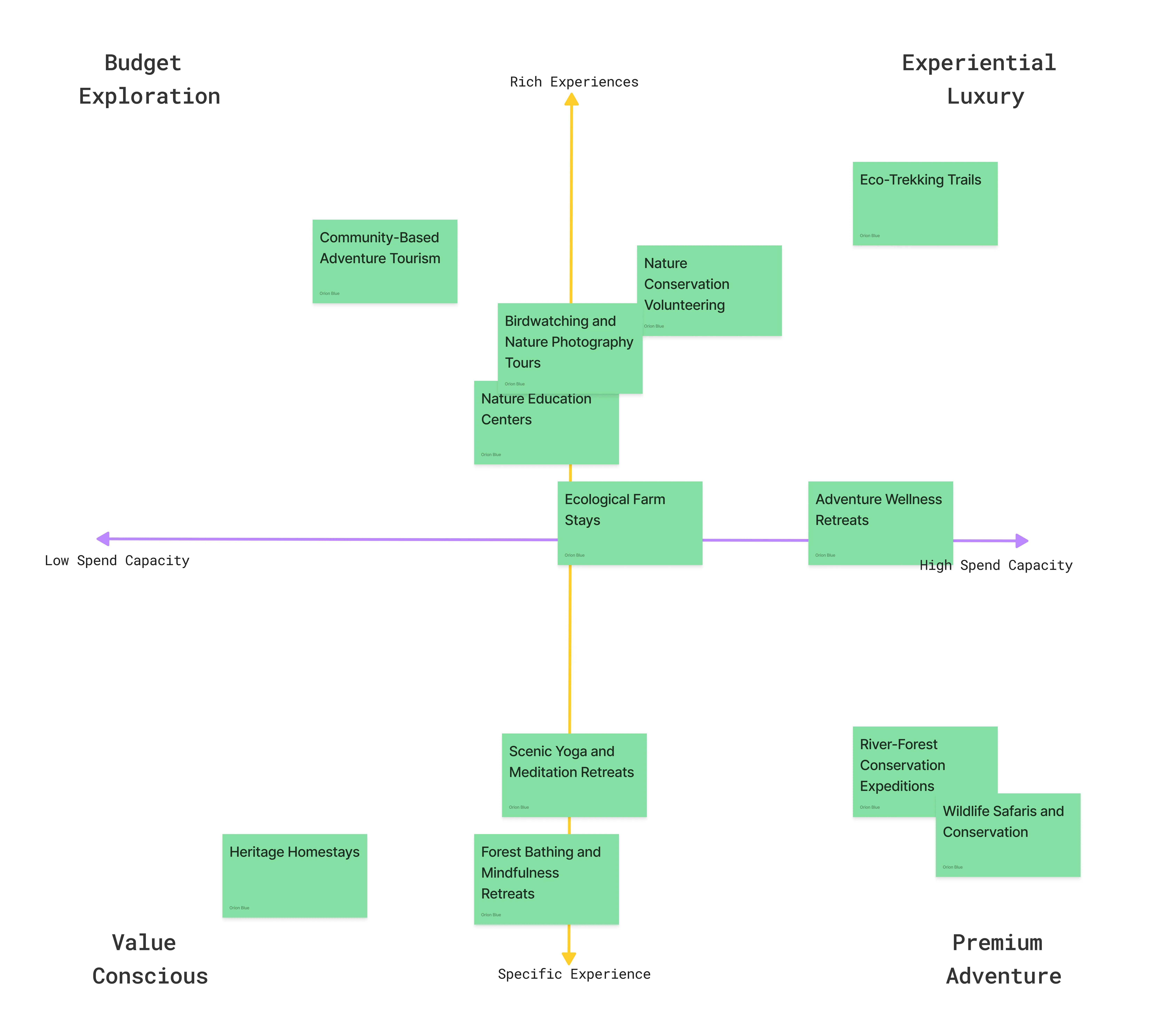
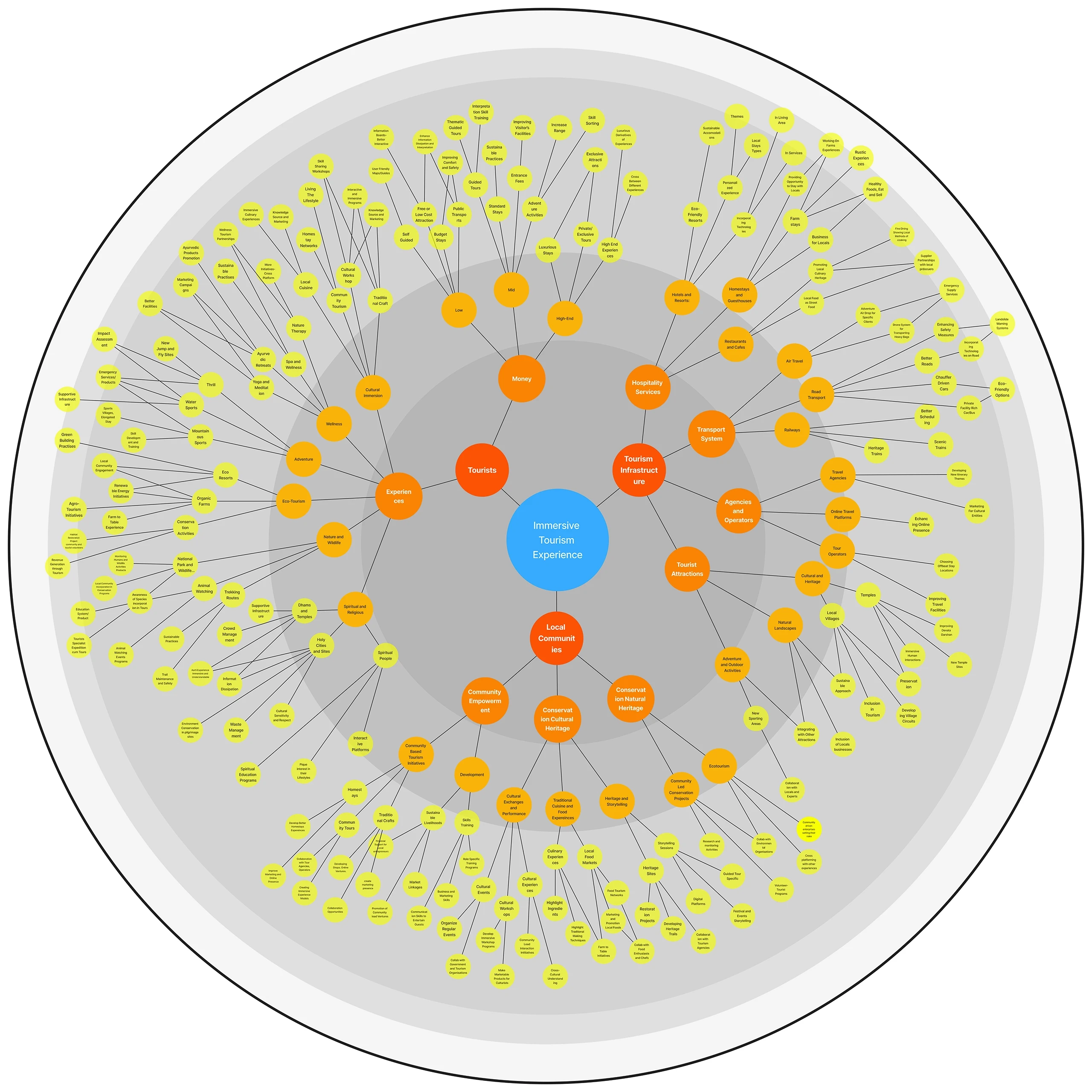
Opportunity Map — “Prioritized innovation areas that informed concept selection.”
Business Model Canvas — “Financial and partnership model to pilot a sustainable retreat.”
Solution Overview
Concept in one line: High-value, low-volume cultural-wellness retreats that pair structured spiritual practices with curated eco-village experiences — designed to maximize cultural respect and local economic benefit.
Core components:
Pre-trip planning portal (itinerary builder + safety checklist + wayfinding)
Curated on-site program (monk-led rituals, yoga, Ayurveda, craft workshops)
Community micro-experiences (homestays, craft labs, guided heritage walks)
Operational safety nodes (medical partnerships, vetted transport, accessibility routes)
Value redistribution (local revenue share, skills training)

Impact & Alignment
This solution aligns with Uttarakhand Tourism Policy 2030 and the UN SDGs by:
Promoting sustainable tourism (SDG 12) through responsible visitor limits and local supply chains.
Supporting decent work & economic growth (SDG 8) by creating local employment and revenue channels.
Strengthening community participation (SDG 11 & 17) via co-creation and partnership models.
Prioritizing climate & conservation measures (SDG 13) by using HVLV strategies.
Reflection & Next Steps
What worked: Field immersion and provotype interviews produced deep empathy and actionable insights. Storyboards and blueprints aligned stakeholders quickly.
Challenges: Scaling a deeply personal retreat model requires careful selection of partner sites and rigorous training for local hosts to preserve authenticity.
Next steps (research roadmap):
Run 3 pilot retreats (small cohorts) to validate guest satisfaction and operational flows.
Conduct co-creation workshops with 5 villages to refine micro-experiences and revenue sharing agreements.
Prototype the pre-trip planning portal and run usability testing with 40 users.
Measure pilot KPIs and iterate blueprint operations.